 dust and starlight
Utah
Bryce Canyon National Park
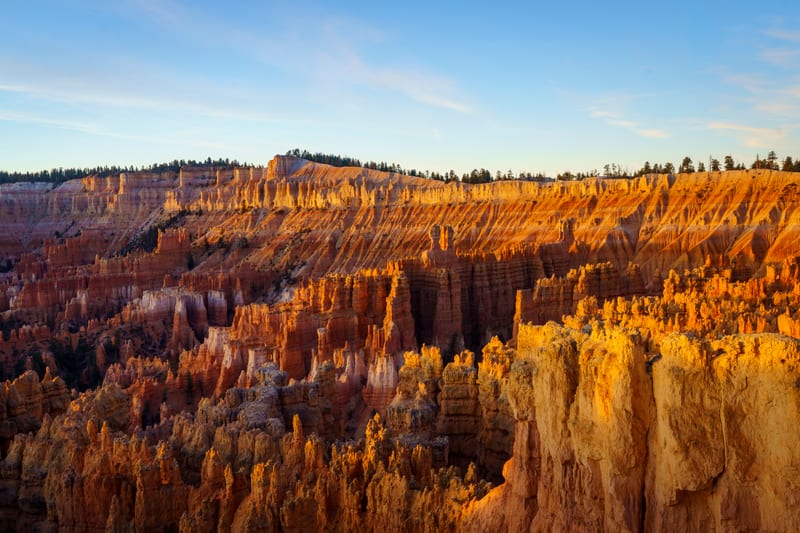
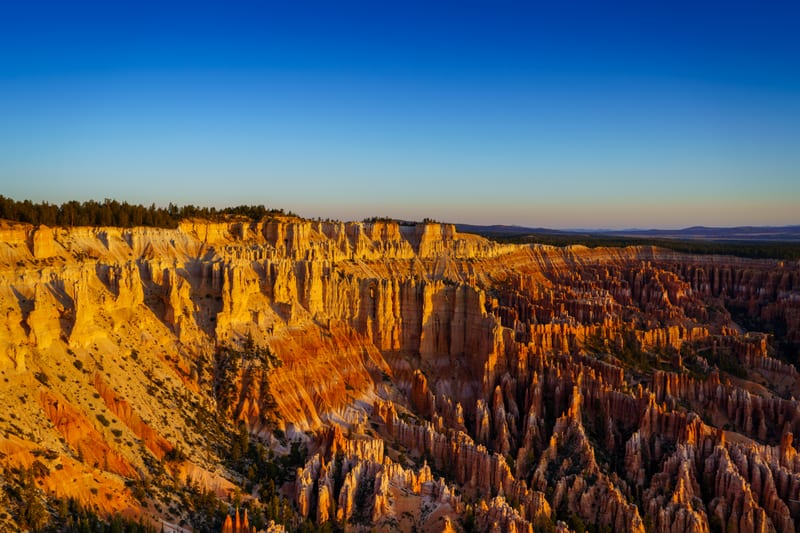
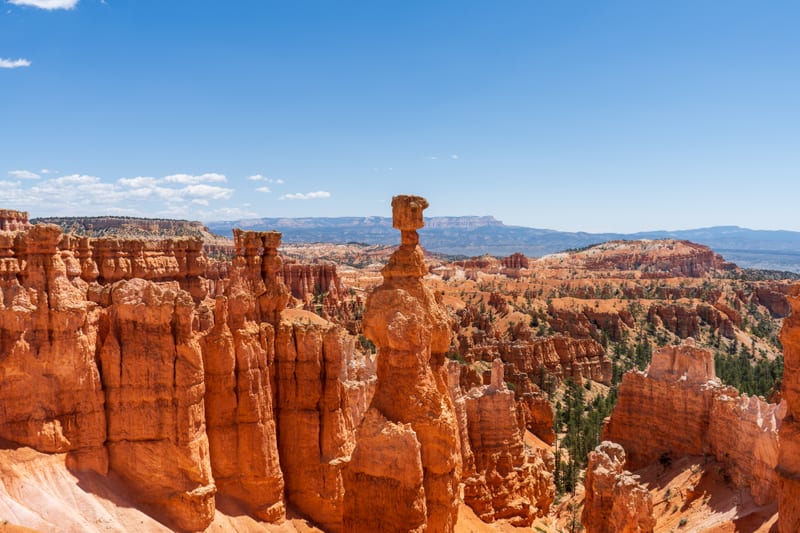
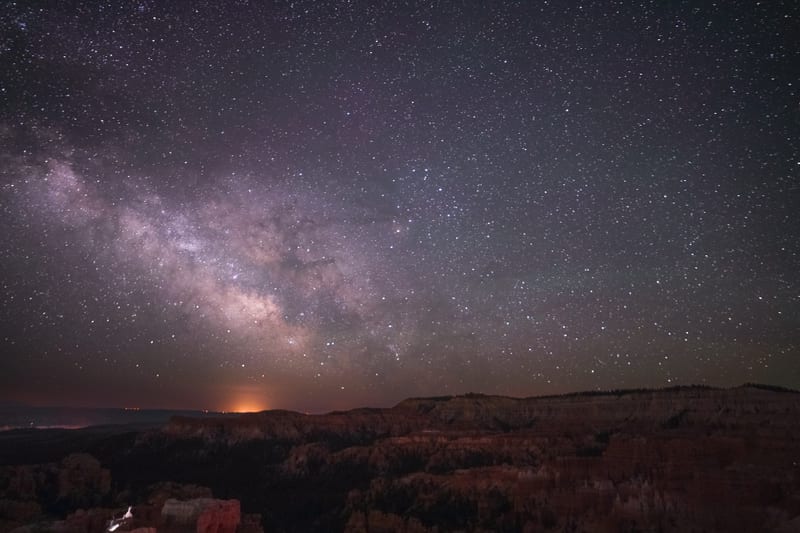
Hoodoos by day and the Milky Way over the amphitheater by night. Bryce is where our first camera broke, and it keeps pulling us back.
Part of Zion and Bryce Canyon, in Utah, with its map and every photo from the region.
- Photographs
- 16
- Made
- June 2024 – November 2025
- Months
- May, June and November
- In the collections
12 photos
Field notes
When to go
Our frames here span early June 2024 (Bryce Point at golden hour, Fairyland Canyon, Thor's Hammer, the Mossy Cave Trail, and a Milky Way night over the amphitheater), May 2025 (back at Mossy Cave, with Tropic Ditch and its falls running high on spring melt) and early November 2025 (sunrise from the rim, the hoodoos going from blue to gold). June is also when the park usually holds its Astronomy Festival, timed to the new moon; the 2026 festival ran June 11–13, and the park's Astronomy Festival page posts each year's dates. Most of our visits have come early in the season, with spring runoff in the ditch, and the weather this high in the desert can turn in any month.
Access and rules
Entrance is $35 per vehicle as of 2026, plus a $100 per-person fee for non-US residents 16 and older, and the park doesn't take cash; check the park's Fees page before you go. For night shooting, bring a headlamp with a red light and use only red at the viewpoints, since white light ruins everyone's night vision. And please don't light paint. For Mossy Cave, see its own section below.
Entry and passes
Entry: $35 per vehicle, 7 days. The $80 America the Beautiful annual pass covers it. Non-US residents 16 and over also pay $100 per person, unless they hold an annual pass. The Bryce Canyon annual pass is $70. The park doesn't take cash.
Our story
This is the park where we broke our first camera, on the very first trip that turned us from people who took pictures on vacation into people who plan trips around pictures. We keep coming back to it for that reason as much as for the hoodoos.
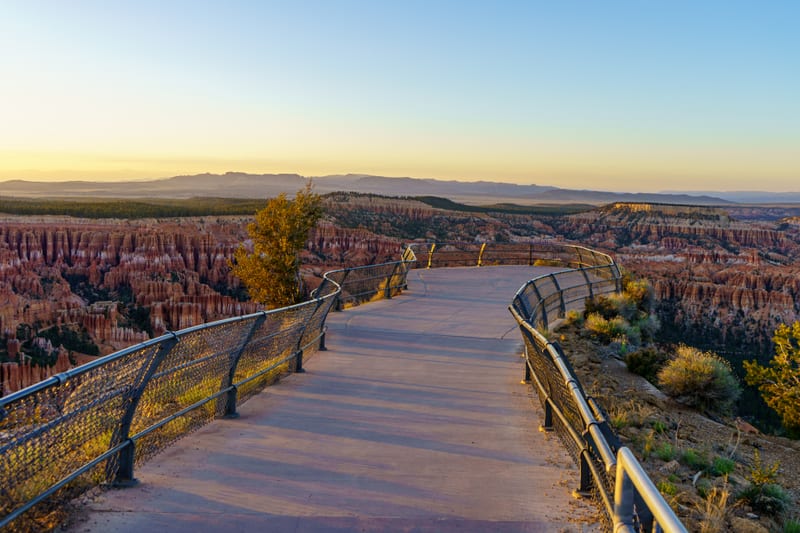
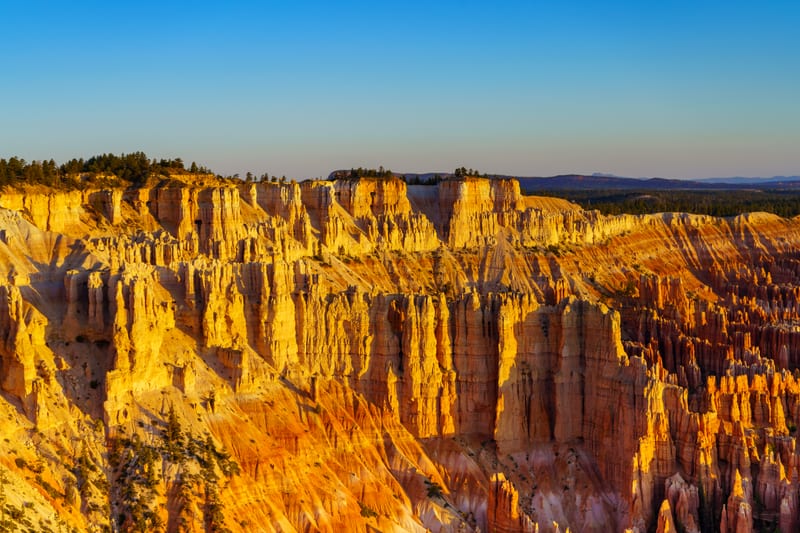
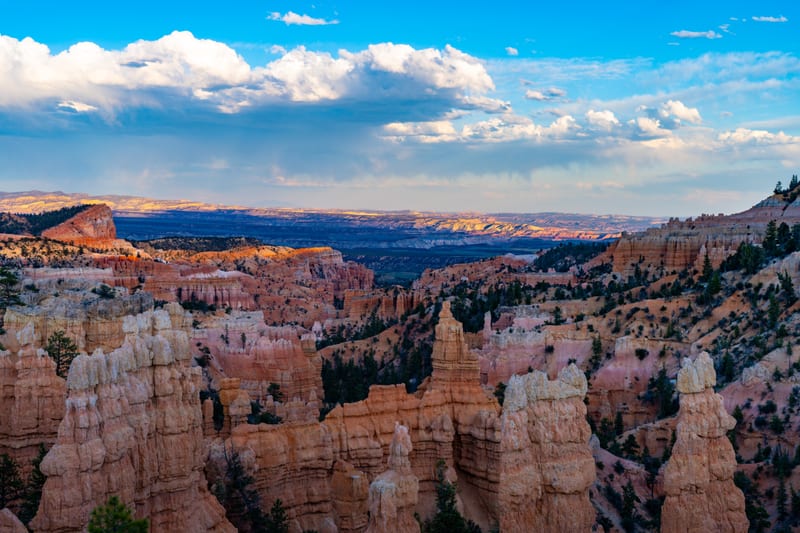
Our photos split into three trips. In June 2024 we mostly worked the rim: Bryce Point at golden hour with nobody else on it, Fairyland Canyon under building clouds, and Thor's Hammer standing out from the amphitheater on a clear day. A few nights later, from the same trip, the Milky Way came up over the amphitheater, the hoodoos just holding their shape in the dark.
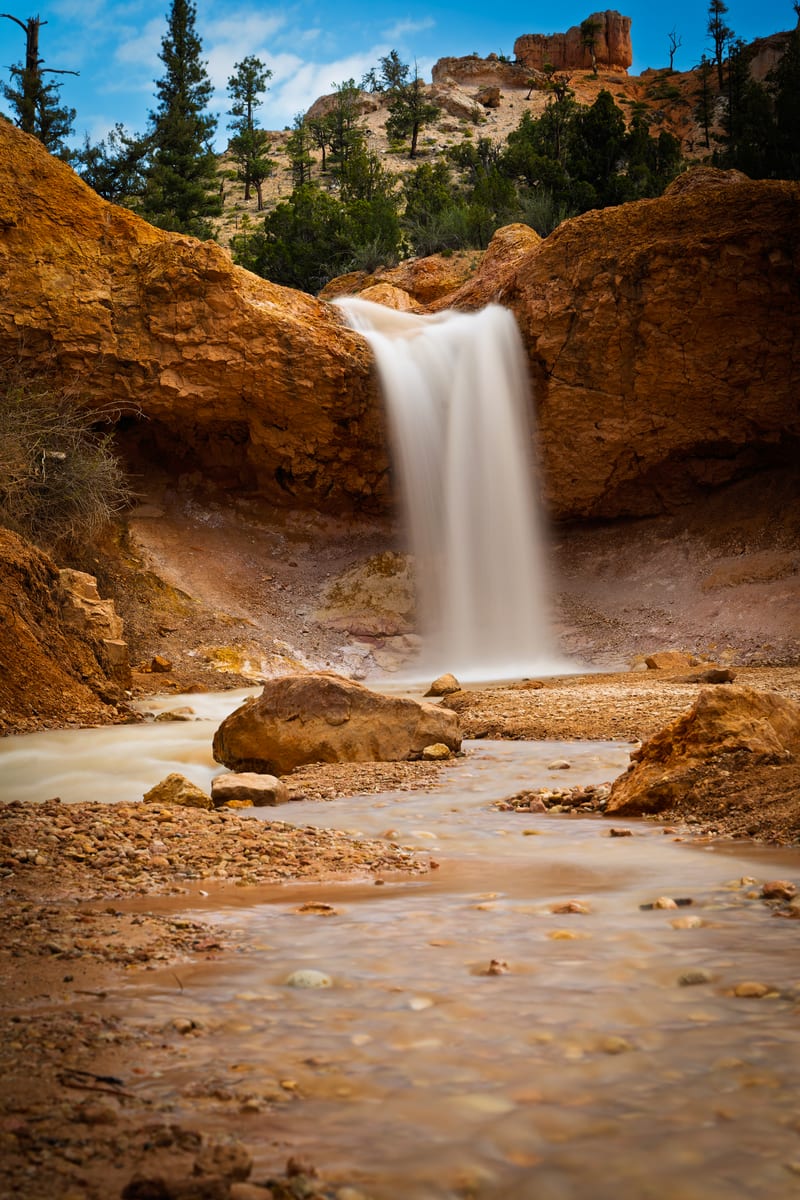
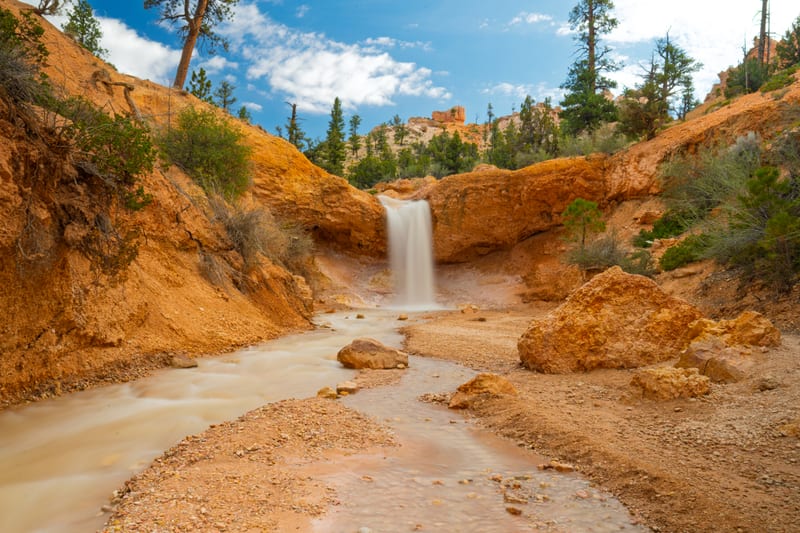
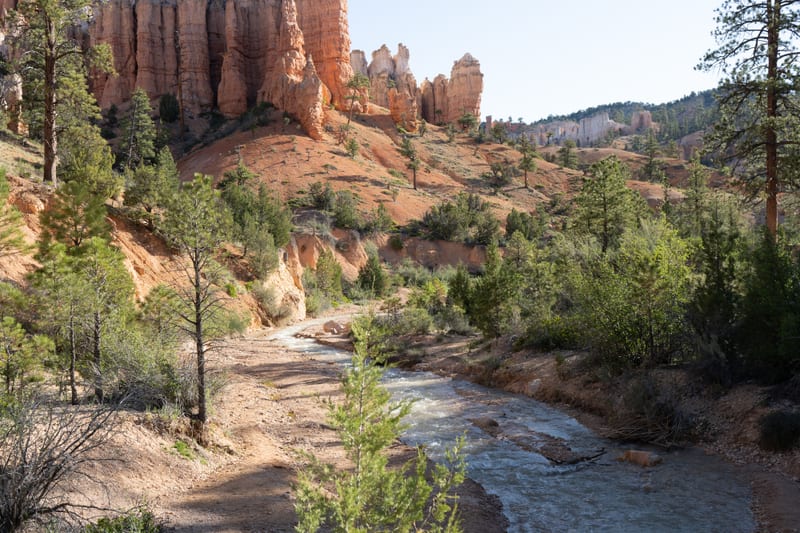
Mossy Cave is Bryce from below, and we've walked it on two trips, both times in the morning and both times on to the cave itself, though it isn't much of a photograph. The trail follows Tropic Ditch, which Mormon pioneers dug with picks and shovels from the East Fork of the Sevier River through the plateau, finishing in 1892, to water the valley towns of Tropic and Cannonville. On June 1, 2024 we walked up along the ditch; the following spring, May 2025, we went back for the footbridge over Tropic Ditch and the falls running high with spring melt below the hoodoos.
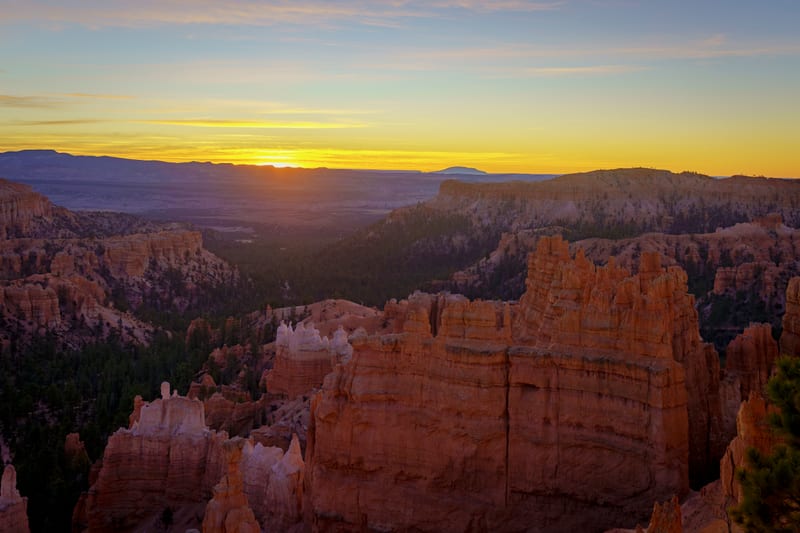
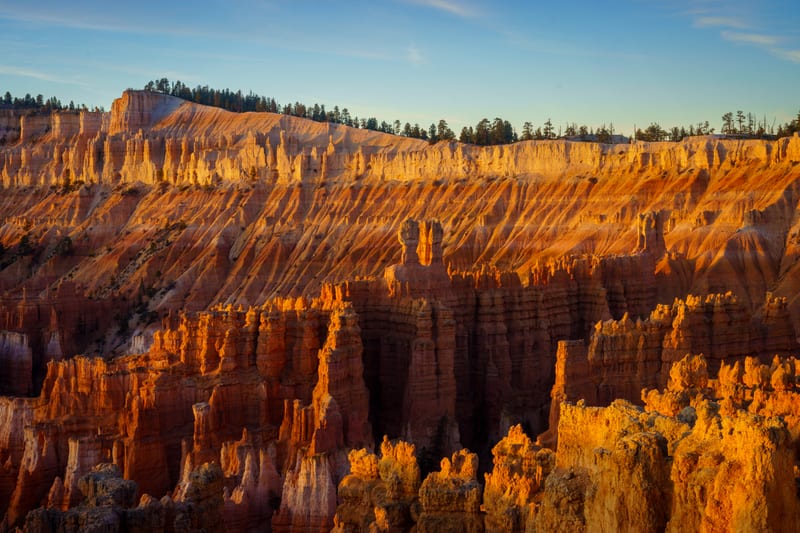
In early November 2025 we were back on the rim before dawn. At Sunset Point a lone hiker was on the rim trail in the blue light, and first light came raking across the amphitheater; from Inspiration Point the hoodoos stood out in the soft light just before sunrise, and the sun cleared the far horizon.
Where the photos were made

 Bryce Amphitheater rim1 photo
 Bryce Point3 photos
 Fairyland Point1 photo
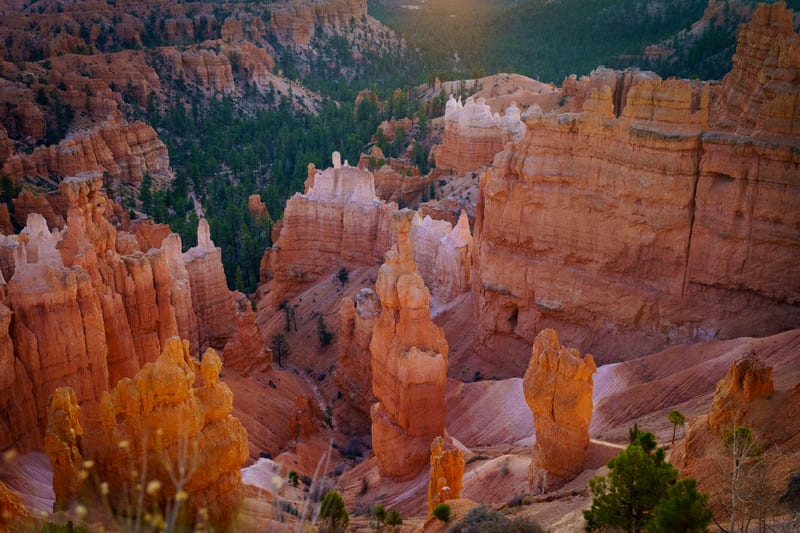 Inspiration Point2 photos
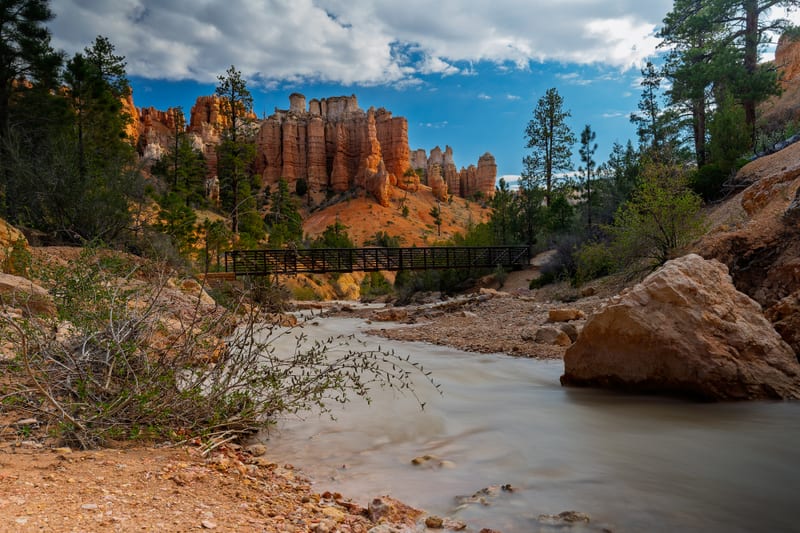 Mossy Cave Trail4 photos
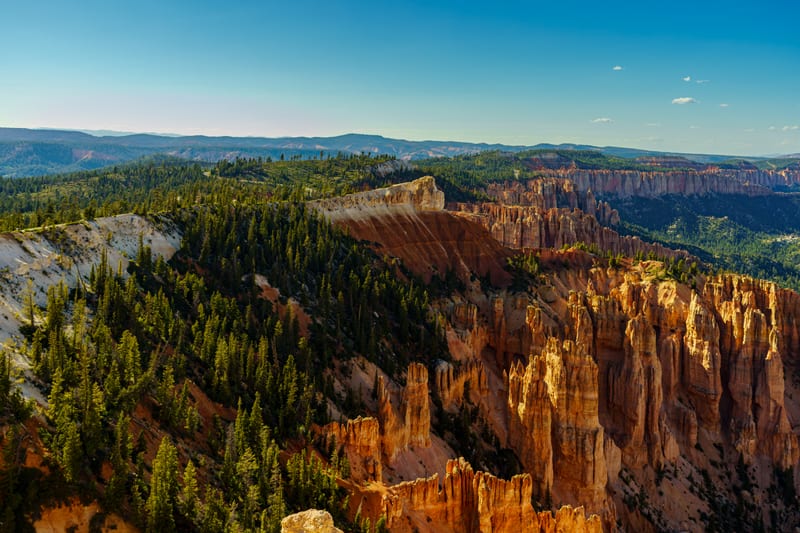 Rainbow Point1 photo
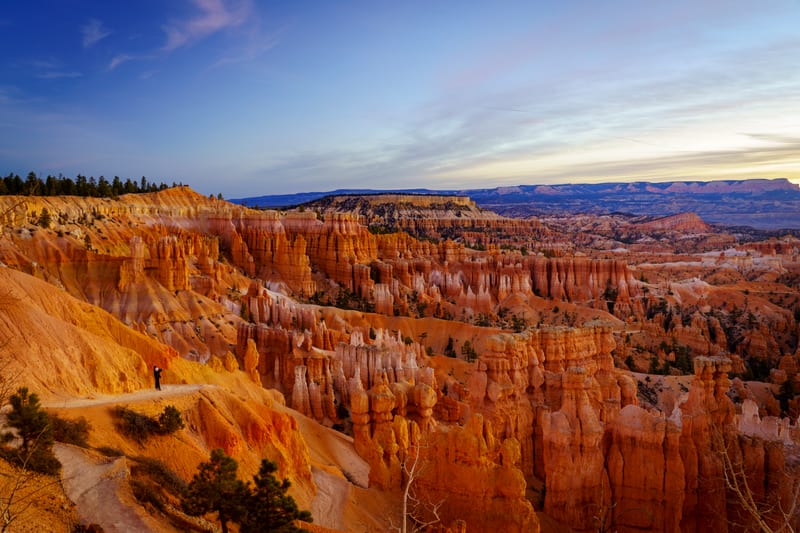 Sunset Point4 photos
Bryce Canyon National Park: the spots are rounded to about a kilometre.
Mossy Cave
The Mossy Cave trailhead is on Highway 12, about 4 miles east of the turnoff for the main park road, and the trail follows Tropic Ditch to a waterfall under the hoodoos: 0.8 miles round trip with about 150 feet of climbing. The falls run in summer and regularly freeze in winter, and the icicles in the cave itself sometimes last into summer. It's a fee area like the rest of the park, so keep your pass or receipt in the car for rangers to check; pets aren't allowed on the trail, and the park asks that you stay out of the cave.
Nearest places
All placesAs the crow flies, from the center of Bryce Canyon National Park to the center of each.