 dust and starlight
California
Joshua Tree National Park
Granite boulders, the Mojave, and the trees the park is named for, in July heat.
- Photographs
- 4
- Made
- July 2026
- Months
- July
- In the collections
4 photos
Field notes
When to go
One trip so far, July 2026, in full Mojave summer heat, and it was unbearably hot. Another season would be much better, and the park agrees: October through May is the best time to visit, with spring and fall highs around 85°F, while summer days run over 100°F. Spring break weekends in March and early April are the busiest.
Access and rules
As of 2026, entry is $30 per vehicle for seven days (see the park's Fees page). There is no drinking water inside the park, so fill up before you go in or at the West Entrance Station, Black Rock Nature Center or a visitor center. In summer the park recommends at least four liters (about a gallon) of water per person, plus extra for cooling off, and hiking only before 9 a.m. or after 5 p.m. Watch for headache, nausea or confusion, which are signs of heat exhaustion.
Entry and passes
Entry: $30 per vehicle, 7 days. The $80 America the Beautiful annual pass covers it. The Joshua Tree annual pass is $55.
Our story
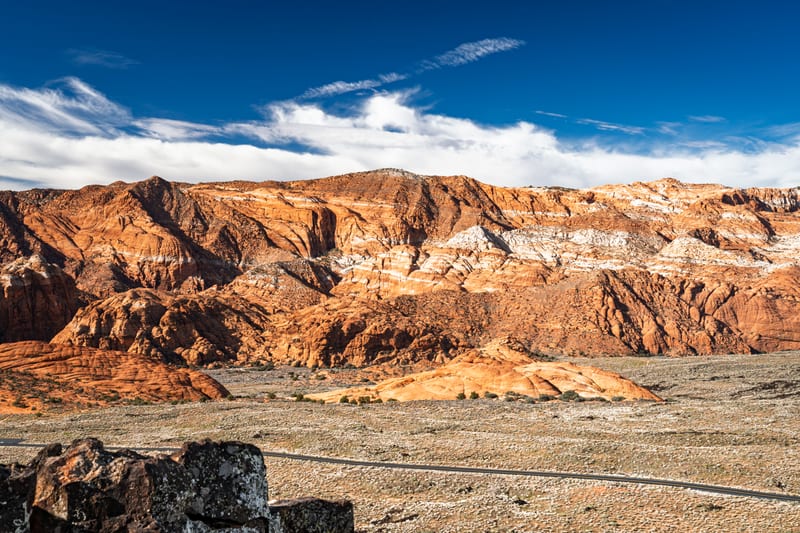
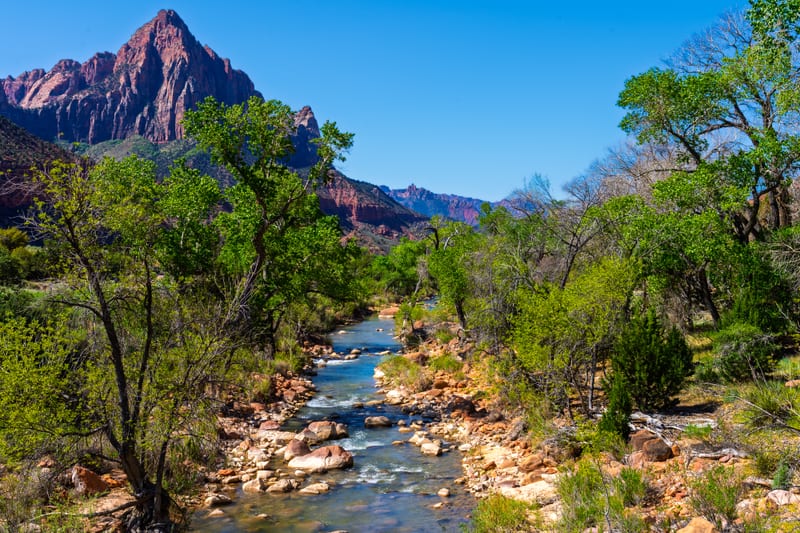
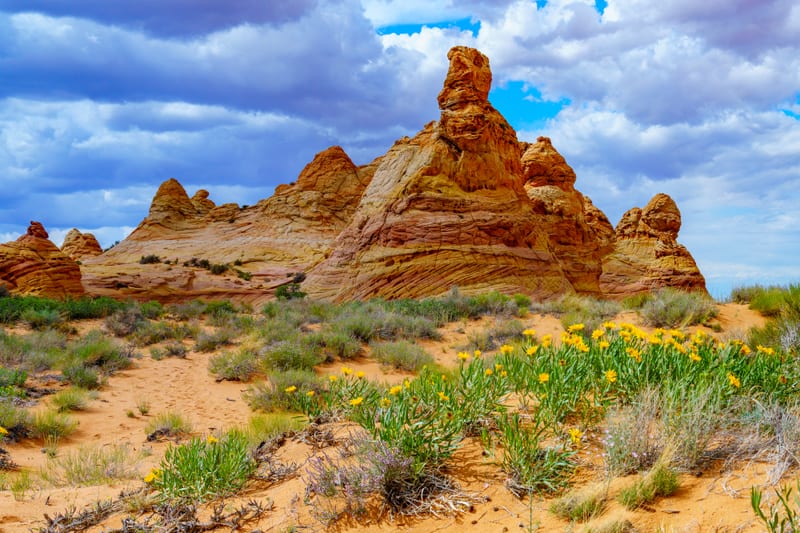
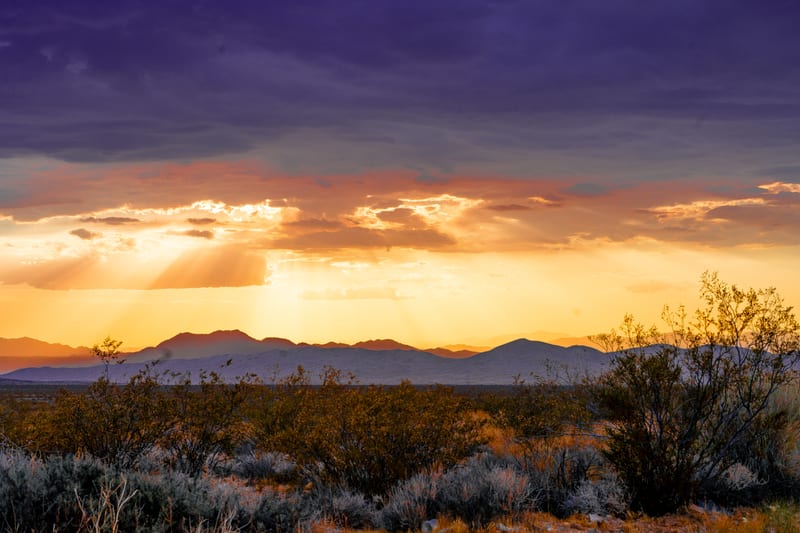
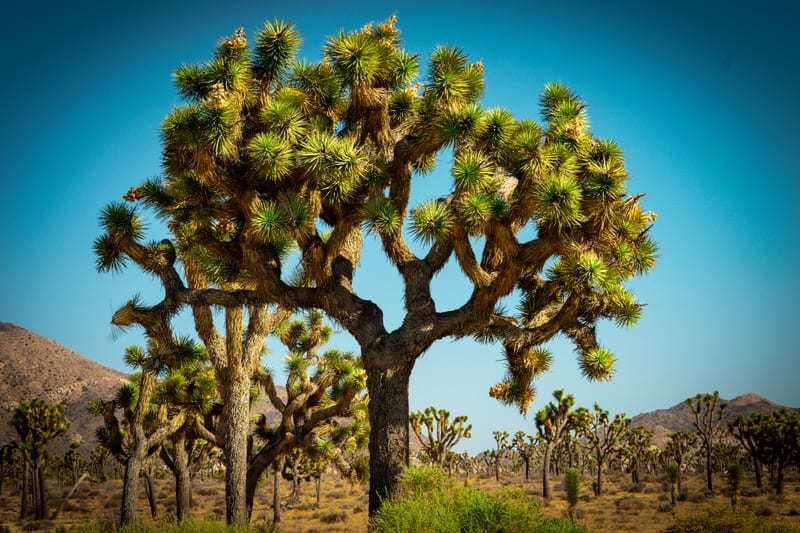
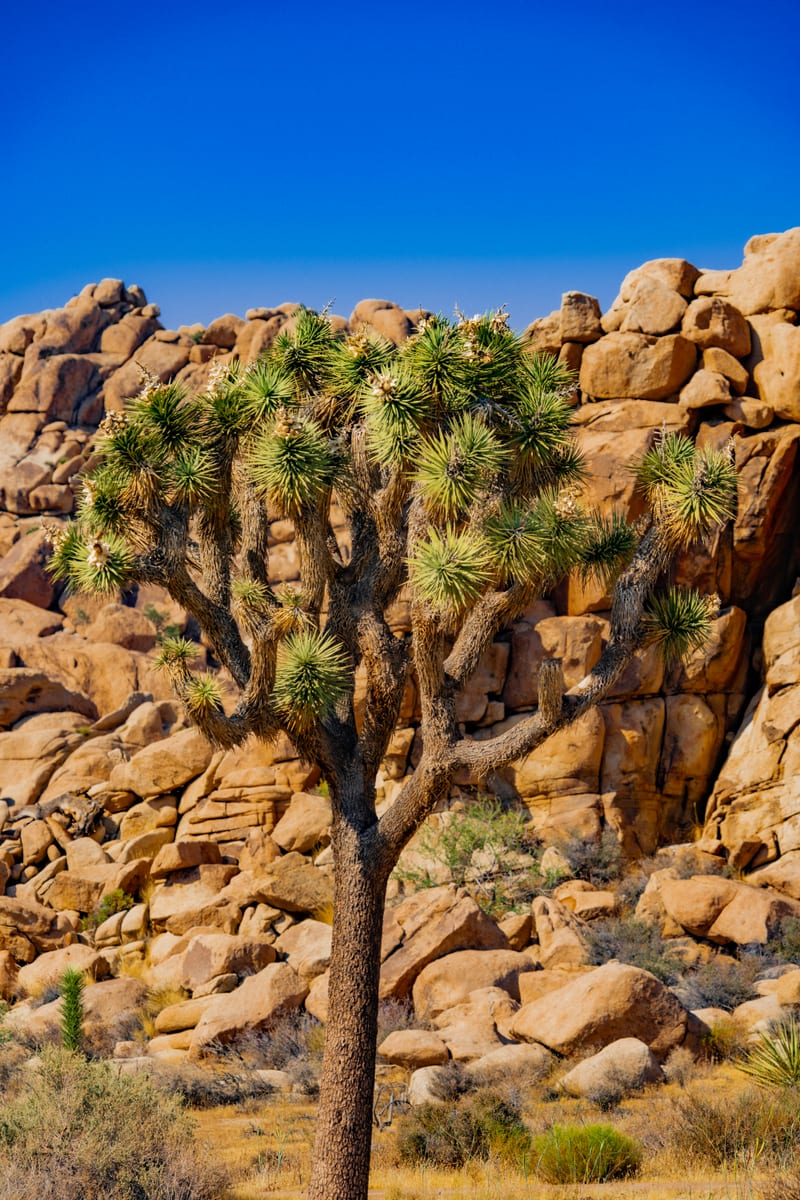
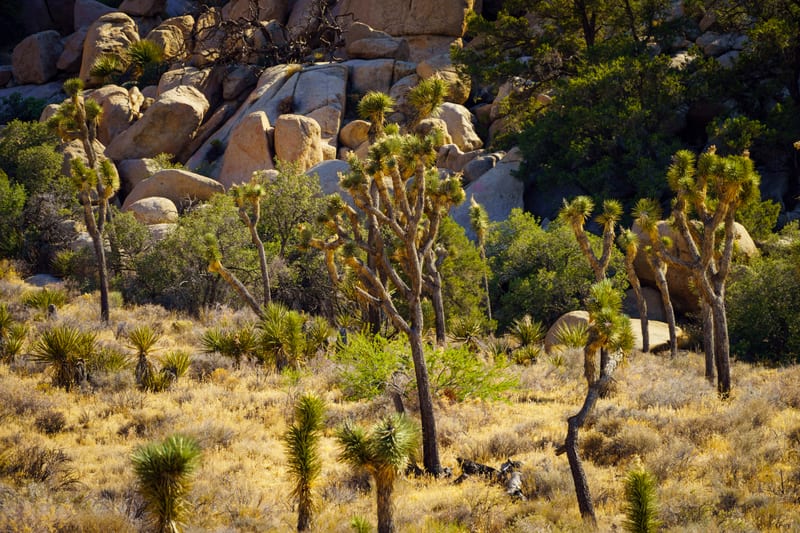
Three frames from one hot July day, on our way home from a work conference: sunset rays breaking through storm clouds over the Mojave, one of the park's largest Joshua trees, and a single Joshua tree standing alone in a field of granite boulders.
We'd like more from this park. It was a short stop rather than a full trip, and the granite boulder fields alone could fill a gallery.
Nearest places
All placesAs the crow flies, from the center of Joshua Tree National Park to the center of each.